


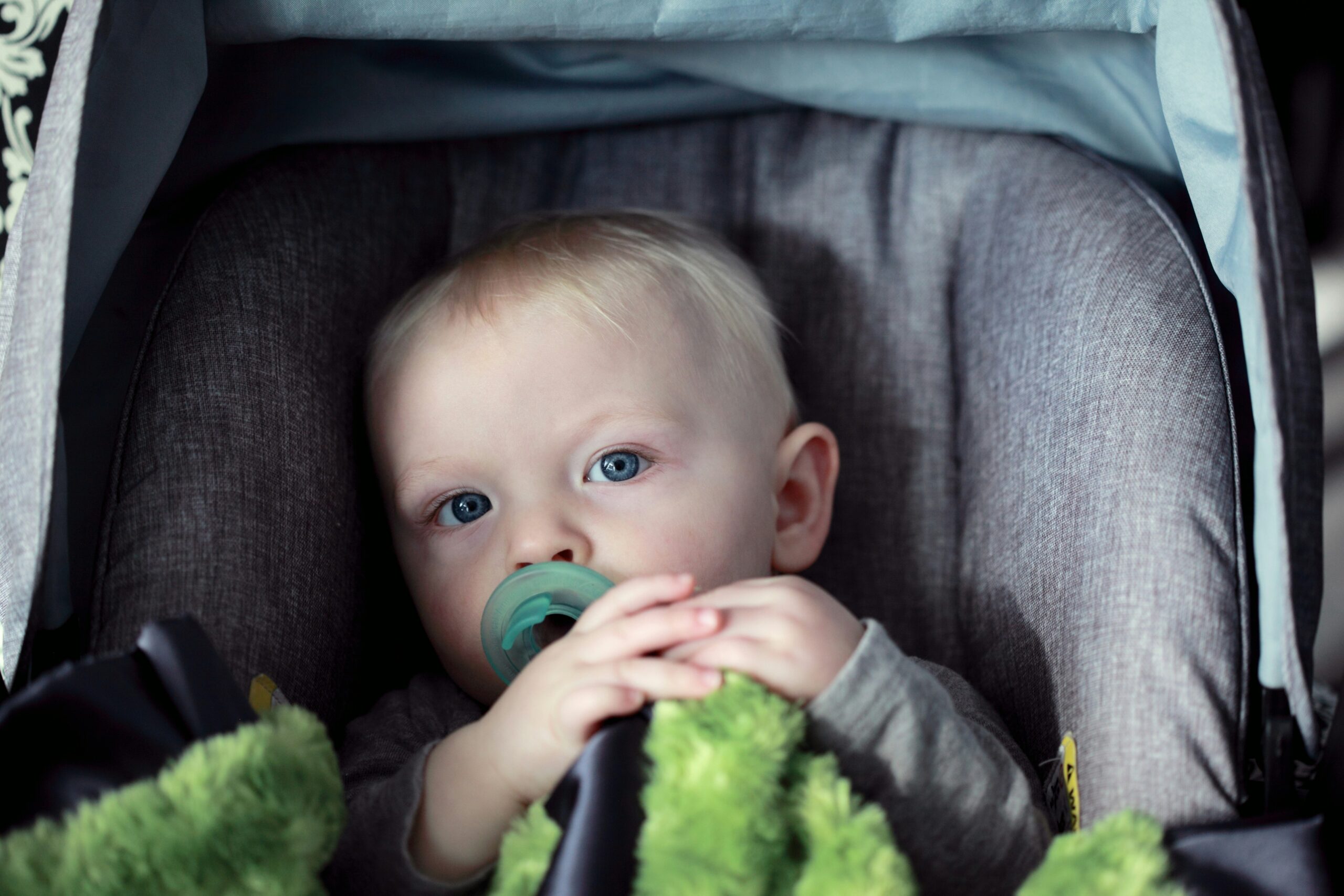
Are baby containers like swings and bouncers actually harming your baby’s development? As a pediatric occupational therapist and mom of three, I’m breaking down why these popular baby devices might not be as helpful as you think.
The Problem with Baby Containers/Devices
Baby containers like swings, bouncers, floor seats, exersaucers, and jumpers are everywhere – but they can actually delay your baby’s motor development. Here’s why:
They Skip Important Developmental Steps
- Babies need to progress naturally: tummy time → roll → sit → crawl → stand → walk
- Devices place babies in positions their bodies aren’t ready for yet
- When we prop babies up before they can sit independently, we bypass crucial strength-building stages
They Limit Natural Movement
- Babies strapped into devices can’t practice rolling, reaching, or exploring
- Limited movement = limited muscle development
- Core strength, balance, and coordination suffer
They Reduce Floor Time
- Every minute in a device is a minute NOT spent developing motor skills
- Babies need free movement to build neural pathways
- Floor time is when the developmental magic happens!
What Baby Devices Do to Your Baby’s Body
Core Strength: Semi-reclined positions in bouncers and swings don’t engage core muscles the way floor time does.
Leg Development: Standing devices often force babies onto their tippy-toes, creating poor movement patterns.
Sensory Systems: Strapped-in babies can’t explore textures, practice balance, or develop spatial awareness.
Check out WeeThrive’s Ultimate Baby Motor Milestone Checklist
What to Do Instead: Floor Time is Free Time!
For Young Babies (0-6 months):
- Plenty of supervised tummy time
- Back play with engaging toys overhead
- Start with just a few minutes several times daily
- Get down on the floor at their level
For Sitting-Age Babies (6-9 months):
- Encourage babies to learn to “get into” sitting prior to working on sitting balance
- Each attempt builds strength and balance, midline orientation, motor planning
For Pre-Crawlers and Crawlers (8-12 months):
- Wide open floor space to explore
- Crawl up stairs with direct parent supervision
- Crawl over obstacles such as pillows and cushions
“But I Need Hands-Free Time!” – Here’s What I Recommend
I get it – you need to shower and make dinner! If you absolutely need a safe spot for baby:
✓ Have a small tummy time mat that you can easily move around the house ✓ Limit bouncer/swing use to 15-20 minutes max twice a day ✓ Don’t make devices part of your daily routine ✓ The minutes add up quickly!
The Bottom Line
Your baby’s body knows what it’s doing. Trust the process and give them:
- Safe floor space
- Age-appropriate toys
- Your interaction and encouragement
- Time to develop at their own pace
Don’t forget to download your FREE Motor Milestone PDF
Checkout our blogpost about the importance of crawling in brain development!

View comments
+ Leave a comment